
Italian Grand Prix
A jelenlegi modell szerint Mercedes vezeti itt a hétvégi sorrendet 7.87-es hétvégi, 7.90-es időmérős és 7.85-es versenyértékkel.
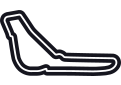
Pálya igények
Pálya elemzés
Monza is the most aerodynamically extreme circuit on the calendar, with a straightline speed demand of 9.5, active aero demand of 9.5, and a downforce setting of just 2.5. Teams run the lowest wing angles of the season, with top speeds exceeding 340 km/h. DRS is available on multiple long straights, amplifying pace gaps between low-drag setups. Cars optimized for high-downforce circuits will be structurally disadvantaged by as much as 0.4 to 0.6 seconds per lap in pure trim terms.
The kerb demand of 8.5 is the counterintuitive challenge at Monza. Chicanes require drivers to attack aggressive kerb profiles at high speeds, and cars that cannot manage the resulting chassis loads risk floor damage or setup compromise. Power unit performance is the primary differentiator in qualifying. In race trim, the slipstream effect makes predicting intermediate positions difficult, but the front row typically controls the race pace. Power-unit leaders tend to perform above their season average here.
Csapat sorrend ezen a pályán

1. Mercedes

2. Ferrari

3. McLaren

4. Red Bull

5. Alpine

6. Haas

7. RB

8. Audi

9. Williams

10. Aston Martin

11. Cadillac
Tippelj az ezen a pályán rendezett következő futamra
Használd a hétvégi, időmérős és verseny-tempós rangsort okosabb tippekhez.
Sign in with Google